
Fleet Scale as a Regulatory Hedge
COSCO’s methanol push is not simply an engineering exercise — it is a hedge against the converging costs imposed by FuelEU Maritime and the EU Emissions Trading System (ETS), both of which now apply to large vessels calling at European ports. FuelEU Maritime sets greenhouse-gas intensity targets that tighten every five years from 2025 to 2050, while the ETS progressively prices CO₂ emitted at sea. Methanol, particularly when produced from renewable or waste-derived feedstocks, can substantially reduce a vessel’s GHG intensity relative to heavy fuel oil, directly lowering a shipowner’s compliance exposure under both regimes.
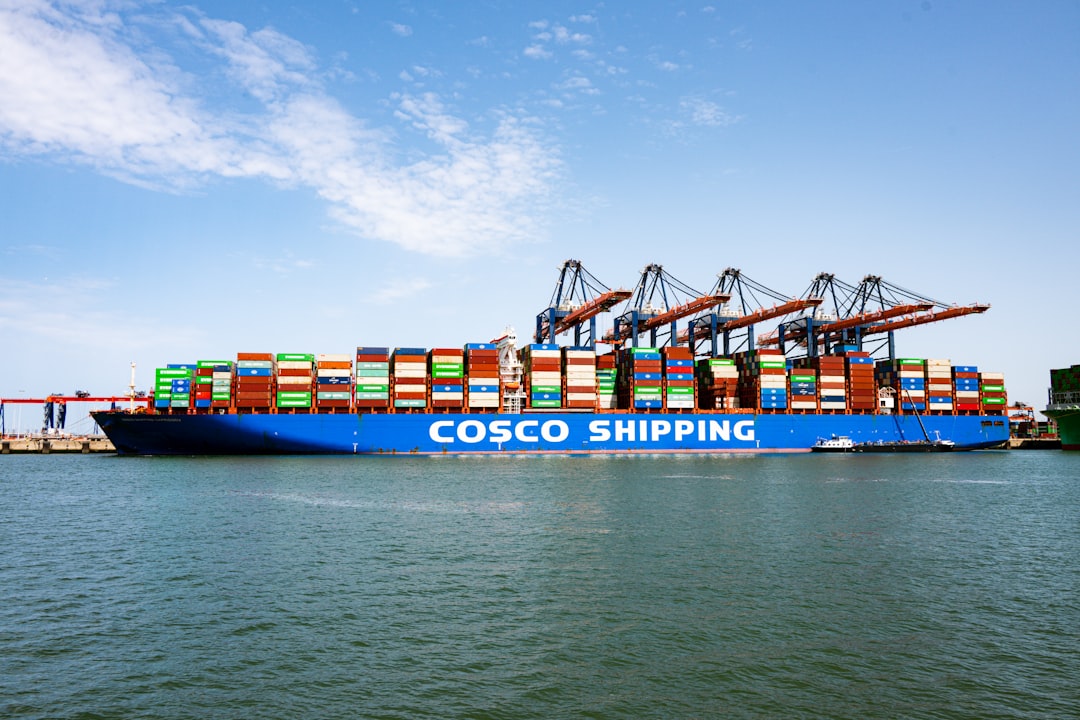
The scale of COSCO’s commitment — seven ships operational and more than 40 under construction — signals that the carrier is treating methanol not as a pilot technology but as a core fleet strategy. That scale also matters for fuel-supply negotiations: a buyer with 50-plus methanol-capable vessels has considerably more leverage to secure long-term offtake contracts than one operating a handful of demonstration ships.
Certification and the RED III Multiplier
Under FuelEU Maritime, not all methanol is equal. Fuel that meets the Renewable Fuels of Non-Biological Origin (RFNBO) criteria defined in the Renewable Energy Directive (RED III) counts at full carbon-reduction value and, crucially, benefits from a 2× multiplier when calculating compliance with the regulation’s sub-target for renewable fuels in shipping from 2034 onward. That multiplier makes green methanol — produced via electrolysis using certified renewable electricity — disproportionately valuable on paper, even though its production cost remains high. Bio-methanol derived from waste or residues can also qualify under RED III’s sustainability criteria, but the certification pathway is more complex and varies by feedstock origin. Shipping companies are increasingly turning to AI-assisted compliance platforms that continuously track RED III certification status across fuel supply chains and automate the MRV (monitoring, reporting and verification) submissions required under FuelEU Maritime, reducing the manual burden of proving fuel provenance voyage by voyage.
For COSCO, whose vessels transit multiple flag states and call at EU, Asian and Middle Eastern ports, maintaining consistent certification documentation across a fleet of 40-plus methanol ships is a non-trivial administrative challenge — one where automation is moving from optional to essential.
What the Retrofit Programme Reveals About Market Direction
The completion of four large container vessel retrofits in April 2026 is notable because retrofitting — rather than ordering newbuilds — compresses the timeline to compliance and signals confidence that methanol bunkering infrastructure is sufficiently mature to support existing routes. It also demonstrates that the economic case for conversion is closing: ETS carbon costs and the prospect of FuelEU non-compliance surcharges are making the capital expenditure of a dual-fuel retrofit look rational compared with the ongoing penalty exposure of an unmodified vessel.
The broader shipping industry is watching COSCO’s programme closely. If a carrier of its scale can operationalise methanol at speed, it validates methanol as a near-term transition fuel rather than a distant aspiration — and increases pressure on European and other Asian carriers to accelerate their own compliance strategies before FuelEU Maritime’s intensity targets bite harder after 2030.
Sources
- Major Carriers Back Maritime Decarbonization as Fuel Market Evolves — CNSS
- Economic Value of Methanol for Shipping under FuelEU Maritime and EU ETS
Featured image via Unsplash.