
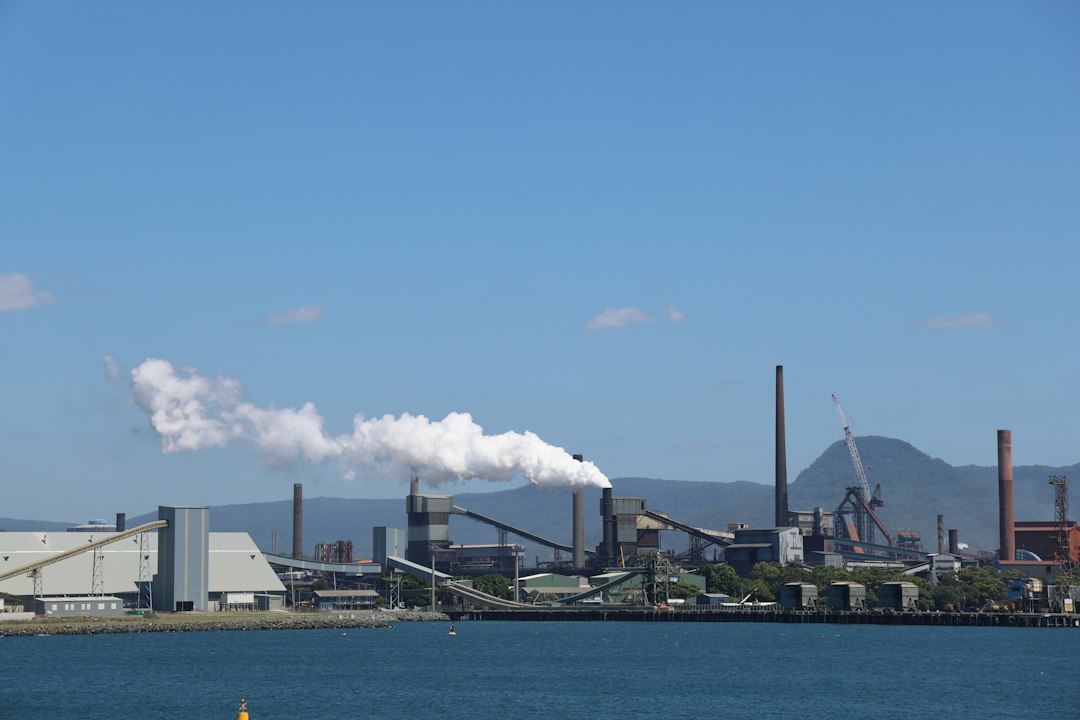
Teesside Endurance Trials: What the Milestone Means
Nova Pangaea’s successful endurance run at Teesside moves the project from proof-of-concept into the pre-commercial zone. Endurance trials are the stage at which process reliability, feedstock handling and fuel-quality consistency are stress-tested over sustained operating periods — the data package that underpins both investor confidence and the certification submissions required under ASTM and EU RED III sustainability criteria. For a UK-based pathway, the results also matter for export into the EU market, where ReFuelEU Aviation requires SAF to meet RED III lifecycle greenhouse-gas thresholds to count toward blending mandates.
The Teesside plant’s feedstock and conversion pathway have not been disclosed in detail in available reporting, but lignocellulosic and waste-residue routes are the principal focus for Nova Pangaea’s REFNBO-adjacent technology. Compliance teams at airlines sourcing future volumes will need to verify that the pathway holds a valid certification scheme approval — ISCC EU or RSB — before upstream contracts can be booked against ReFuelEU obligations.
ReFuelEU Enforcement: Infringement Proceedings Signal a Harder Regulatory Posture
The timing of Nova Pangaea’s announcement coincides with a significant escalation in EU enforcement. The European Commission launched infringement proceedings against 13 Member States in June 2026 for failing to communicate how they would apply financial penalties to airlines and fuel suppliers that miss ReFuelEU Aviation blending requirements. The regulation entered force in January 2025 with a 2% SAF minimum; penalty non-communication undermines the credibility of the entire compliance architecture and creates an uneven playing field for producers who have invested in certified supply chains.
For SAF developers and their airline offtakers, the infringement action is a signal that the Commission intends to enforce, not merely encourage. Legal and compliance teams are increasingly deploying AI-assisted platforms that monitor RED III and ReFuelEU obligation trackers in real time, automating the documentation trails — chain-of-custody records, lifecycle emission calculations, certification expiry alerts — that national competent authorities will require when penalty regimes are finally activated.
Commercial Scale: The Gap Between Demonstration and Mandate
Completing endurance trials is necessary but not sufficient for ReFuelEU compliance contribution. The regulation demands actual volumes delivered into airport fuelling systems at certified quality. The path from a demonstration plant to a commercial facility capable of supplying meaningful tonnage involves final investment decisions, project finance, engineering procurement and construction timelines that typically span three to five years — meaning projects clearing technical milestones in 2026 are targeting the 2030 to 2032 window at the earliest.
The efficiency case for SAF in aviation is structurally different from road transport, where battery-electric alternatives are mature and the well-to-wheel efficiency gap versus e-fuels is approximately five-to-one in electricity consumption. Aviation has no near-term battery substitute for medium- and long-haul routes, which is precisely why ReFuelEU mandates exist and why demonstration milestones like Teesside carry real commercial weight.
Sources
Featured image via Unsplash.
This is not an official site. It is published by a private company and does not emanate from any public authority, institutional programme, government department or research organisation. It represents none of them and speaks for none of them in any capacity.
Nature of the content. Articles are documentary summaries drawn from cited public sources. They may contain inaccuracies, omissions or information that has since become outdated. No financial, technical, legal or investment advice is provided.
Always verify against primary sources. For any information concerning a public programme, a regulation or an institutional project, only the publications of the competent authority are authoritative.
© 2026 BESS Energie SRL · BCE 0698.949.732 · info@bess.be